



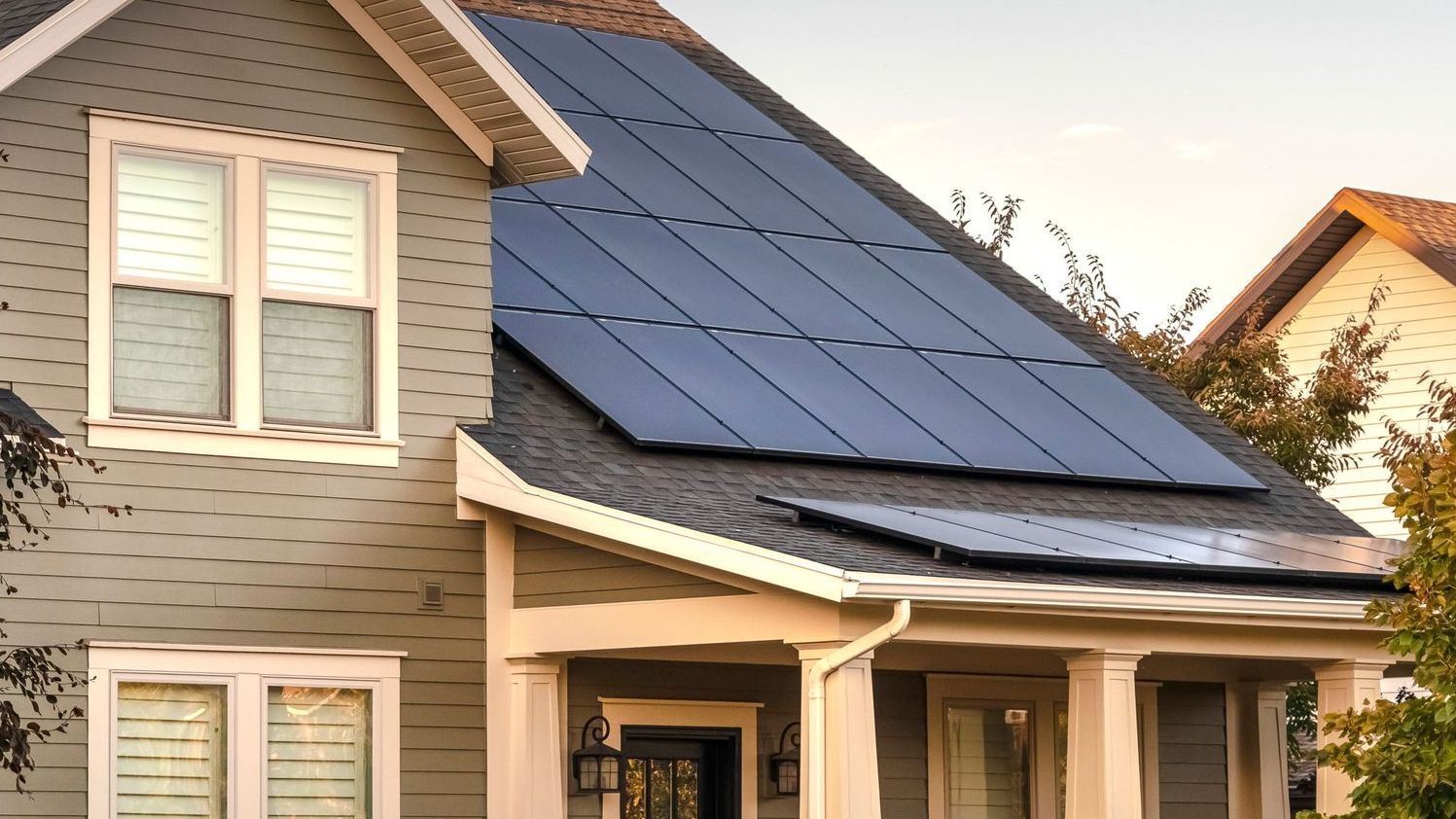
The cost of solar panels in Connecticut in 2026 depends entirely on how you pay. A prepaid solar lease ranges from $2.00 to $3.00 per watt(about 30% less than cash). A $0-down PPA requires no money upfront, with rates from 16¢ to 30¢ per kWh. And a cash purchase runs $2.70 to $4.00 per watt depending on system size. This guide breaks down every solar panel cost factor for Connecticut homeowners, compares all three financing options side by side, and shows you exactly how the math works against current Eversource electricity rates.

In This Guide
Solar Panel Cost Calculator
Select your utility and enter your monthly bill to see estimated costs and savings across all three financing options.
Estimates only. Actual costs depend on roof, shading, equipment, and site conditions. Cash prices shown after CT sales & property tax exemptions. Get a personalized quote.
Solar Panel Cost in Connecticut: The 2026 Numbers
The average cost of solar panels in Connecticut in 2026 ranges from $2.70 to $4.00 per watt for a cash purchase after state tax exemptions, depending on system size, equipment quality, and installer. Smaller systems (7 panels) can cost up to $4.00/watt, while larger systems benefit from volume pricing that brings the per-watt cost down. For a typical Connecticut home using about 8,100 kWh of electricity per year — roughly $190/month on your electric bill — you'd need approximately an 8 kW system.
But here's what most solar panel cost guides don't tell you: the sticker price depends heavily on how you choose to pay. Whether you're an Eversource or United Illuminating (UI) customer, Connecticut homeowners in 2026 have three distinct financing paths, and each one carries a different price tag and a different level of risk.
Solar panel cost in Connecticut in 2026: $0 upfront with a PPA (16–30¢/kWh, no escalator available), $2.00–$3.00/watt with a prepaid solar lease (up to 30% less than cash, full maintenance included), or $2.70–$4.00/watt with a cash purchase (after CT tax exemptions). Use our Solar Cost Calculator above to see personalized pricing.
Is Solar Worth It in Connecticut in 2026?
Yes — Connecticut is one of the best states for solar in 2026, even without the expired federal residential tax credit (Section 25D ended December 31, 2025). Here's why: Connecticut homeowners pay 28–36¢ per kWh all-in to Eversource or United Illuminating — nearly double the national average of 16.5¢/kWh. That means every kilowatt-hour your solar panels produce is worth roughly twice what it would be in most other states.
With a prepaid solar lease at $2.00–$3.00/watt, a typical 8 kW system pays for itself in 5–9 years and then generates free electricity for the remaining 11–15 years of the lease term. Even after accounting for the $0.0402/kWh Solar Energy Adjustment for 2026 RRES enrollees, the math strongly favors going solar. Connecticut's sales tax exemption (6.35%) and permanent property tax exemption further improve the economics. The only scenario where solar may not be worth it is if your roof has heavy shading, faces north, or needs replacement within the next 5 years.
3 Ways to Pay for Solar Panels in Connecticut
The solar panel cost you'll actually pay in Connecticut comes down to which financing option makes sense for your situation. Here's how all three compare:
| Feature | $0-Down PPA | Prepaid Lease | Cash Purchase |
|---|---|---|---|
| Upfront Cost | $0 | $2.00–$3.00/watt | $2.70–$4.00/watt |
| Monthly Payments | Yes (16–30¢/kWh) | ✓ None | ✓ None |
| Maintenance | ✓ PPA provider handles | ✓ SunPol handles | Your responsibility |
| System Ownership | Third-party PPA provider | SunPol (buyout at end of term) | You own from day one |
| Savings vs. Cash | No upfront investment needed | up to 30% less than cash | Baseline price |
| Savings vs. Eversource (8 kW) | Immediate bill reduction | $30K–$38K+ over 20 years | $25K–$32K over 20 years |
| Escalator Risk | ✓ No-escalator options available | ✓ No escalator | ✓ No escalator |
| Transfer on Sale | Transferable (with approval) | ✓ Easy transfer — prepaid | ✓ Transfers with home |
| Best For | No upfront capital | Best value for capital | Full ownership priority |
Option 1: $0-Down PPA — No Upfront Solar Panel Cost
A $0-down PPA(power purchase agreement) lets you go solar in Connecticut with zero upfront cost. SunPol handles the installation, but a third-party financing partner owns and maintains the system on your roof. You simply pay a per-kWh rate for the electricity the system produces — a rate that's lower than what you currently pay Eversource or United Illuminating. PPA rates in Connecticut typically range from 16¢ to 30¢ per kWh, depending on your system size, roof orientation, and how much direct sunlight your home receives. Homes with better sun exposure qualify for lower per-kWh rates.
Through SunPol, we offer no-escalator PPA options — meaning your per-kWh rate stays locked in for the life of the agreement with no annual increases. This is a significant advantage, since many PPA providers elsewhere include 1–3% escalator clauses that gradually raise your rate over 20–25 years. With a no-escalator PPA, the rate you sign at is the rate you'll pay for the entire term. For homeowners who don't have capital for an upfront payment, a $0-down PPA is the easiest way to start saving immediately.
Note on federal tax credits: The Section 25D residential clean energy credit expired December 31, 2025, meaning Connecticut homeowners who buy solar with cash or a loan receive $0 in federal tax credits in 2026. However, with a PPA, the third-party system owner can still claim the 30% commercial Investment Tax Credit under Section 48/48E — and those savings are passed through to you as lower PPA rates. This is one reason PPA rates remain competitive in 2026.
Option 2: Prepaid Solar Lease — Lowest Total Cost
A prepaid solar lease is a single upfront payment that's up to 30% less than the cash purchase price for the same system. At $2.00 to $3.00 per watt, a typical 8 kW Connecticut system runs approximately $16,000 to $24,000. You pay once, SunPol installs and owns the system, and you get all the electricity it produces with no monthly lease payments for 20–25 years. SunPol handles all monitoring, maintenance, and repairs for the full term.
The reason the prepaid lease price is lower than buying outright is the lease concession — a built-in discount of up to 30% that comes from SunPol retaining ownership during the lease term. At the end of the lease (20–25 years), you may purchase the system at its fair market value, which is typically minimal after decades of use.
For a deeper dive into how prepaid leases work, read our complete Prepaid Solar Lease & PPA Guide.
Option 3: Cash Purchase — Full Ownership From Day One
A cash purchase gives you complete ownership of the solar panels from the moment they're installed. In Connecticut in 2026, cash purchase pricing after state tax exemptions ranges from $2.70 to $4.00 per watt, depending on system size. Smaller systems (7 panels) can run up to $4.00/watt, while larger systems benefit from volume pricing that brings the cost per watt down. You're responsible for all maintenance and monitoring, but you also capture the full value of the system over its 25–30 year lifespan.
The cash purchase carries the highest upfront solar panel cost, but for homeowners who prioritize ownership and have the capital available, it remains a solid option. With Connecticut's high electricity rates, the typical payback period is 10–14 years, after which your electricity is essentially free for the remaining 15–20 years of the panel warranty.
See the exact solar panel cost for your Connecticut home — all three options compared.
Get My Free QuoteSolar Panel Cost by System Size in Connecticut
How much solar panels cost in Connecticut depends heavily on the size of the system you need. Larger systems cost more overall but typically have a lower cost per watt. Here's what Connecticut homeowners can expect to pay in 2026 across all three financing options:
| System Size | Annual kWh | PPA (25-yr total) | Prepaid Lease | Cash Purchase |
|---|---|---|---|---|
| 5 kW | ~5,400 | $21K–$39K $72–$135/mo × 25 yrs |
$10,000–$15,000 | $16,500–$20,000 |
| 7 kW | ~7,560 | $29K–$55K $101–$189/mo × 25 yrs |
$14,000–$21,000 | $21,000–$28,000 |
| 8 kW | ~8,640 | $34K–$63K $115–$216/mo × 25 yrs |
$16,000–$24,000 | $23,000–$30,400 |
| 10 kW | ~10,800 | $42K–$79K $144–$270/mo × 25 yrs |
$20,000–$30,000 | $27,500–$35,000 |
| 12 kW | ~12,960 | $50K–$94K $173–$324/mo × 25 yrs |
$24,000–$36,000 | $32,400–$40,000 |
Prices are estimates for Connecticut in 2026. Actual solar panel cost varies based on roof condition, pitch, shading, and equipment selection. PPA column shows estimated 25-year total cost based on monthly payments at 16–30¢/kWh with ~0.25% annual rate decrease and $0 upfront. Prepaid lease includes lease concession (up to 30% below cash). Cash prices shown after CT sales tax exemption; smaller systems have a higher cost per watt. Applies to both Eversource and UI customers. Get a personalized quote for exact pricing.
Most Connecticut homes need a system between 7 kW and 10 kW to offset their full electricity usage. To estimate your system size, divide your annual kWh usage (found on your Eversource or UI bill ) by approximately 1,080 — the average annual kWh production per kW of solar capacity in Connecticut.
Solar Panel Cost vs. Eversource & UI Rates: The Real Savings Math
Understanding solar panel cost in Connecticut means comparing it to the alternative: paying your utility for the next 20+ years. Connecticut is served by two major utilities — Eversource (serving 1.3 million customers across 157 towns) and United Illuminating (UI) (serving ~341,000 customers in the New Haven and Bridgeport areas). Both have among the highest rates in the nation.
As of January 2026, Eversource's standard service supply rate is 12.64¢/kWh(a 29% increase from the summer rate of 9.748¢), while UI's supply rate is 13.695¢/kWh(a 17% increase from 11.684¢). These rates are set through PURA-approved procurement auctions and reset every January 1 and July 1. But supply is just one piece of your bill. With delivery, transmission, and public benefit charges included, most Connecticut customers pay an all-in rate of 26–32¢/kWh. For reference, the average UI residential customer using 700 kWh/month pays $252.12 (Jan–Jun 2026). You can compare current supplier rates on the EnergizeCT Rate Board.
What's Actually on Your Bill: Full Rate Breakdown
Connecticut electricity bills have four main sections: supply, transmission, local delivery, and public benefits. Here's the full per-kWh breakdown for both utilities, sourced from Eversource's published delivery rates (effective May 1, 2025), UI's rate schedule , and the CT OCC consumer alert :
| Bill Component | Eversource (Rate 1) | UI (Rate R) |
|---|---|---|
| Supply | ||
| Generation Service Charge (GSC) | 12.640¢ | 13.695¢ |
| Transmission | ||
| Transmission Charge | 4.433¢ | 3.275¢ |
| Local Delivery | ||
| Distribution Charge | 5.844¢ | 5.844¢* |
| Electric System Improvements (ESI) | 1.911¢ | — |
| Revenue Decoupling | 0.101¢ | — |
| CTA (Competitive Transition) | −0.029¢ | — |
| Fixed Monthly Charge | $9.62/mo | $12.84/mo |
| Public Benefits | ||
| Combined Public Benefits Charge | ~3.3¢† | ~2.7¢† |
| FMCC (Federally Mandated Congestion) | Variable | Variable |
| Effective All-In Rate | ~28–30¢/kWh | ~36¢/kWh |
| Average Total Bill (700 kWh/mo) | ~$200–$210 | $252.12 |
*UI's delivery structure differs from Eversource; distribution charges shown for comparison. †Public Benefits Charge was reduced in September 2025 after the CT legislature authorized state bonding funds to offset costs. FMCC varies based on Millstone nuclear contract and ISO-NE charges. Rates are subject to change; supply resets every Jan 1 and Jul 1, delivery adjusts May 1. Sources: Eversource delivery rates , Eversource bill components , UI pricing , CT OCC Jan 2026 alert.
The Solar Energy Adjustment: What 2026 Enrollees Need to Know
If you enroll in Connecticut's RRES (Residential Renewable Energy Solutions) Netting Tariff in 2026, your system will be subject to a Solar Energy Adjustment of $0.0402/kWh on all solar production. This is an 8x increase from the prior $0.005/kWh rate for legacy customers. For a typical 8 kW system producing ~8,640 kWh/year, that's approximately $347/year deducted from your solar savings.
This charge applies to total production measured at the inverter — not just the electricity you export to the grid. Legacy customers who enrolled before 2026 are grandfathered at $0.005/kWh through December 31, 2039. The adjustment is locked in for 20 years at whatever rate applies when you enroll. Our calculator above factors this charge into all savings estimates.
The 2026 Solar Energy Adjustment rate of $0.0402/kWh is locked in for 20 years when you enroll in the RRES Netting Tariff. PURA reviews and sets this rate annually — there is no guarantee the 2027 rate won't be higher. Enrolling in 2026 locks in the current rate for the full term of your solar agreement.
Your 20-Year Electricity Cost: Utility vs. Solar
Based on average CT home using ~8,100 kWh/year. Eversource all-in ~28¢/kWh. UI all-in ~36¢/kWh ($252/mo at 700 kWh).
Even at $3.00/watt for a prepaid lease on an 8 kW system ($24,000), you'd save over $30,000 compared to staying on Eversource or UI for 20 years. At $2.00/watt ($16,000), the savings jump to nearly $38,000+. And those numbers are conservative — they assume only ~3% annual rate increases, when the actual trajectory has been steeper in recent years.
The 2022–2023 winter is a reminder of how volatile Connecticut electricity rates can be. During that period, Eversource's supply rate surged to over 24¢/kWh due to the global natural gas crisis — more than double the pre-spike rate. UI customers experienced similar spikes. Homeowners with solar were completely insulated from those shocks.
What Affects Solar Panel Cost in Connecticut
The solar panel cost you'll pay in Connecticut depends on five main factors: system size (the biggest driver), your roof's condition and orientation, equipment quality, which financing option you choose, and local permitting requirements. Larger systems have a lower cost per watt but higher total price, while south-facing roofs with moderate pitch yield the best economics. Here's how each factor affects your price:
System Size
The biggest factor in your solar panel cost is system size, which is determined by how much electricity your home uses. Check your Eversource bill for your annual kWh usage. A home using 8,100 kWh/year needs approximately an 8 kW system. A home using 12,000 kWh/year needs closer to 11 kW. Larger systems cost more overall but have a lower cost per watt.
Roof Condition and Layout
Your roof's age, material, pitch, and orientation all affect solar panel installation cost. South-facing roofs with a moderate pitch (25–35 degrees) are ideal and typically cost less to install. Multi-plane roofs, steep pitches, tile or slate surfaces, and older roofs that need reinforcement increase labor and mounting costs. If your roof needs replacement before solar, it's best to do that first.
Equipment Quality
SunPol installs premium Tier 1 solar panels with 25-year manufacturer warranties and Enphase microinverters with 25-year warranties. Higher-efficiency panels cost more per watt but generate more electricity per square foot — which is critical if you have limited roof space. For battery backup, we install Enphase and Franklin battery systems for whole-home energy storage.
Financing Method
As the comparison table above shows, the same physical system has a different cost depending on how you pay. The prepaid solar lease includes a lease concession that lowers your upfront price by up to 30% compared to cash. A PPA eliminates upfront cost entirely but results in a higher total cost over time. Your choice of financing is the second-largest factor (after system size) in determining your overall solar panel cost.
Permitting and Interconnection
Connecticut permitting requirements vary by town. Some municipalities charge permit fees for solar installations; others waive them. Eversource interconnection — the process of connecting your system to the grid — is part of every installation. SunPol handles all permits and interconnection paperwork as part of our service, so you don't need to navigate these costs separately. The entire process from signed agreement to system activation typically takes 30–60 days. Note: Connecticut requires a completed Home Energy Solutions (HES) energy audit before your solar system can be approved under the RRES program — SunPol will coordinate this if you haven't already completed one.
Connecticut Solar Tax Exemptions That Reduce Your Cost
Connecticut offers two permanent tax exemptions that reduce the effective solar panel cost for homeowners regardless of financing method. The state sales tax exemption eliminates 6.35% tax on all solar equipment and installation labor, saving $1,100–$1,900 on a typical system. The property tax exemption ensures solar panels won't increase your property taxes despite adding $10,000–$14,000 in home value. Here's how each works:
Sales Tax Exemption (6.35%)
Connecticut exempts solar panel systems from the state's 6.35% sales and use tax. This applies to panels, inverters, batteries, mounting hardware, and installation labor. On a $25,000 system, that's approximately $1,588 in savings. The exemption has no expiration date and applies to all qualifying solar installations. Your installer handles form CERT-140 at the time of purchase.
Property Tax Exemption (100%)
Solar panels increase your home's assessed value, but Connecticut's property tax exemption ensures your property taxes won't go up as a result of the installation. This is a permanent exemption — you apply once through your local tax assessor's office after installation, and the added value from solar is excluded from your property tax assessment for as long as you own the system.
Whether you choose a prepaid solar lease, $0-down PPA, or cash purchase, Connecticut's sales tax and property tax exemptions benefit you. These are state-level exemptions, not dependent on any federal programs.
Solar Panel Payback Period in Connecticut
Solar panels pay for themselves in Connecticut faster than most states because electricity rates are nearly double the national average. With a $0-down PPA, savings begin immediately since your rate is set below Eversource or UI. A prepaid solar lease typically pays back in 5 to 9 years, and a cash purchase in 10 to 14 years — after which electricity is essentially free for the remaining panel warranty period. Here's how payback works for each option:
Prepaid solar lease: While your overall savings begin from day one (since you've eliminated your monthly bill), the "payback" — meaning the point where your cumulative avoided utility bills exceed your one-time prepaid payment — is typically 5 to 9 years depending on system size and your Eversource or UI rate. After that point, every kWh your system produces over the remaining 11–15 years represents pure savings.
$0-down PPA: Your savings also begin immediately, since your PPA rate is set below your current Eversource or UI rate. Through SunPol, no-escalator PPA options are available, meaning your rate stays locked in for the entire agreement with no annual increases.
Cash purchase: The typical payback period for a cash purchase in Connecticut is 10 to 14 years, depending on system size and your utility rate. After that, your electricity is essentially free for the remaining 15–20 years of the panel warranty. Both Eversource and UI territory customers benefit from high electricity rates (28–36¢/kWh all-in) that accelerate the payback timeline compared to most other states.
All payback estimates account for the $0.0402/kWh Solar Energy Adjustment for 2026 RRES enrollees, which reduces net savings by approximately $347/year for an 8 kW system.
Want to see the exact solar panel cost and payback for your home?
Get My Free QuoteWhy Connecticut Homeowners Choose SunPol
Your Installer Is Your Lease Provider
For prepaid solar leases, SunPol is both the installer and the system owner. One company, one relationship, one phone number — from design and installation to monitoring, maintenance, and billing. For $0-down PPAs, SunPol handles the installation so you get the same quality workmanship, while a third-party financing partner owns and maintains the system and handles the billing structure.
All Three Financing Options Under One Roof
SunPol is one of the only residential solar companies in Connecticut that offers all three financing options: $0-down PPA (through our financing partner), prepaid solar lease, and cash purchase. We'll help you compare the solar panel cost and long-term value of each option based on your specific situation — and we'll never push one option over another because we offer them all.
Premium Equipment, No Shortcuts
We install premium Tier 1 solar panels with 25-year warranties and Enphase microinverters with 25-year warranties. For battery storage, we use Enphase and Franklin battery systems. Because our prepaid lease structure means we own and maintain the system for 20–25 years, using reliable, high-quality equipment is in our direct interest.
Licensed, Insured, and Local
SunPol holds Connecticut Home Improvement Contractor license HIC-0698394, is BBB Listed, and is a CT Green Bank approved contractor. We're headquartered in Newington, CT and serve over 60 towns across central Connecticut. We're not a national call center — we're your neighbors.
Frequently Asked Questions About Solar Panel Cost in Connecticut
The cost of solar panels in Connecticut in 2026 depends on how you pay. A $0-down PPA costs nothing upfront — you pay 16–30¢/kWh with no-escalator options available. A prepaid solar lease costs $2.00–$3.00 per watt, which is approximately 30% less than a cash purchase. A cash purchase runs $2.70–$4.00 per watt depending on system size. For a typical 8 kW system, that's roughly $16,000–$24,000 prepaid or $21,600–$32,000 cash. Use our calculator for estimates based on your bill.
The cheapest upfront option is a $0-down PPA — no money out of pocket, savings from day one. For the lowest total cost over the system's lifetime, a prepaid solar lease is approximately 30% less than a cash purchase and includes full maintenance. The "cheapest" option depends on whether you're optimizing for lowest upfront cost or lowest total cost.
A typical Connecticut household pays approximately $54,000+ to Eversource over 20 years (at ~28¢/kWh all-in with ~3% annual increases). A prepaid solar lease at $2.00–$3.00 per watt for an 8 kW system costs $16,000–$24,000 as a one-time payment — a potential savings of $30,000 or more. Even a cash purchase at $2.70–$4.00/watt saves significantly compared to staying on Eversource. Use our calculator to see your personalized savings.
Connecticut offers two key exemptions: (1) Sales Tax Exemption — no 6.35% state sales tax on solar equipment and installation, saving approximately $1,100–$1,900 on a typical system. (2) Property Tax Exemption — solar panels increase home value but your property taxes won't go up. Both exemptions apply regardless of whether you choose a PPA, prepaid lease, or cash purchase.
With a $0-down PPA, savings begin immediately since your per-kWh rate is lower than Eversource or UI from day one. With a prepaid solar lease, your "payback" is measured as the time it takes for your avoided utility bills to exceed your one-time prepaid payment — typically 5–9 years depending on system size and utility rates, after which every kWh your system produces is pure savings. For a cash purchase, the typical payback period in Connecticut is 10–14 years, after which your electricity is essentially free for the remaining 15–20 years of the panel warranty. All payback estimates should account for the $0.0402/kWh Solar Energy Adjustment for 2026 RRES enrollees.
A prepaid solar lease is a single upfront payment that covers 20–25 years of solar energy production. SunPol installs, owns, and maintains the system. The prepaid price is up to 30% lower than cash thanks to the lease concession — a built-in discount that comes from SunPol retaining ownership. You get the same system at a lower cost, plus full maintenance for the entire term. Learn more in our prepaid lease guide.
SunPol installs premium Tier 1 solar panels with 25-year manufacturer warranties, Enphase microinverters with 25-year warranties, and Enphase and Franklin battery systems for home energy storage. We never cut corners on equipment because our prepaid lease model means we own and maintain the system — so quality and long-term reliability are in our direct interest.
For January through June 2026, Eversource's supply rate is 12.64¢/kWh and UI's is 13.695¢/kWh ( source: CT OCC ). But supply is only part of the bill. When you add delivery, transmission, and public benefit charges, most CT customers pay 26–32¢/kWh all-in. See our full rate breakdown table for every line-item component.
SunPol serves over 60 towns across central Connecticut from our Newington headquarters, including Hartford, West Hartford, New Britain, Glastonbury, Farmington, Wethersfield, Rocky Hill, Cromwell, Middletown, Bristol, Southington, Cheshire, Meriden, Wallingford, Berlin, and Plainville. See our full service area.
Yes. Enphase and Franklin battery systems can be paired with any of our solar financing options — PPA, prepaid lease, or cash purchase. Battery storage is especially valuable in Connecticut, where winter storms can cause extended power outages. Connecticut's Energy Storage Solutions program also offers incentives to help offset battery installation costs. Learn more about solar battery storage.
The number of solar panels depends on your electricity usage and the wattage of each panel. A typical Connecticut home uses about 8,100 kWh per year and needs approximately an 8 kW system — that's roughly 19–20 individual panels at 400–420 watts each. Homes with higher usage (10,000–12,000 kWh/year) may need 25–30 panels. Use our calculator above to estimate your system size based on your monthly bill, then divide the kW result by 0.42 to approximate the number of panels.
Yes. Studies show solar panels increase home value by approximately 3–4% on average. For a $350,000 Connecticut home, that's roughly $10,500–$14,000 in added value. Connecticut's permanent property tax exemption ensures this added value does not increase your property taxes. With a prepaid solar lease, the system transfers with the home at sale — and because it's fully prepaid with no monthly payments, it's an attractive feature for buyers rather than a liability.
Premium Tier 1 solar panels are warrantied for 25 years and typically continue producing electricity for 30–35 years. Panel output degrades slowly — about 0.3–0.5% per year — meaning after 25 years your panels still produce roughly 87–92% of their original output. Enphase microinverters also carry 25-year warranties. Connecticut's climate (snow, rain, heat) does not significantly reduce panel lifespan when panels are properly installed and maintained.
See Your Exact Solar Panel Cost
Get a free, customized quote showing your exact solar panel cost and savings across all three financing options — based on your roof, your Eversource usage, and your goals. No pressure, no obligation.
Get My Free QuoteWhat Happens After You Request Your Free Solar Report?
We review your address and usage — using your Eversource or UI bill data and satellite imagery of your roof. Takes about 60 seconds on your end.
You receive a personalized solar report — showing your exact cost, savings, and payback for all three financing options (PPA, prepaid lease, and cash) side by side.
If you want to move forward, we schedule a free site survey — an on-site visit to confirm the design. No obligation at any step.